
Edges and outlets are common weak points.
Why the weak points on a flat roof are often found at the details rather than across the middle of the surface.
When a flat roof starts leaking, most people assume the problem must be somewhere in the middle of the roof covering. It is an understandable assumption, but in practice that is often not where the issue begins. More often, leaks start at the points where the roof changes direction, where water is encouraged to flow away, or where different materials have to meet and be sealed properly. In other words, the trouble usually starts around the details.
Two of the most common problem areas are the roof edges and the outlets. These parts of a flat roof deal with movement, weather exposure, drainage, and joins all at once. If something is slightly off, whether that is ageing material, poor workmanship, blocked drainage, or failed seals, water has a much easier route in. That is why many leaks that appear indoors can actually trace back to these areas rather than the open span of the roof itself.
Why Leaks Rarely Start in the Middle of a Flat Roof
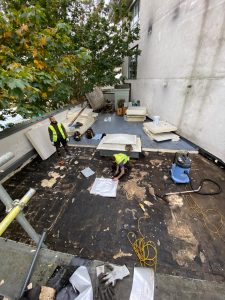 The central area of a flat roof is usually the most straightforward part of the system. It is the broad, uninterrupted surface where the waterproofing layer can be laid cleanly and evenly. Provided the roof has been installed properly and the material is still in reasonable condition, that area is often less likely to fail first.
Problems tend to develop where the membrane has to stop, turn up, wrap around, or connect to another detail. Those transitions are naturally more vulnerable. Every join, corner, outlet, trim, and change in level introduces another opportunity for weakness. That does not mean the main roof area never fails, but if you are trying to understand where leaks often begin, the details deserve attention first.
Why Roof Edges Are a Common Failure Point
Roof edges are under constant pressure from the weather. Wind catches them first. Rain is often driven towards them. Temperature changes can cause repeated expansion and contraction. Over time, that movement can place strain on trims, seals, and fixings, particularly if the detailing was not done carefully in the first place.
Edges also matter because they are where the waterproofing layer is often terminated. If the roof covering has lifted slightly, if a trim has loosened, or if the seal at the perimeter has started to break down, water can get beneath the surface surprisingly easily. Once that happens, it may travel inward before it becomes visible indoors, which makes the source harder to spot at a glance.
| Roof Area | Why It Is Vulnerable | Typical Warning Sign |
|---|---|---|
| Edges and trims | Exposed to wind, movement, and seal failure | Lifting edges or visible gaps |
| Outlets | Constant water flow and risk of blockages | Slow drainage or standing water |
| Upstands and corners | Multiple changes in direction and jointing points | Cracking, splitting, or staining nearby |
Why Outlets and Drainage Points Cause So Many Problems
Outlets are another natural weak point because they deal with water every single time it rains. The purpose of the flat roof is to move water safely towards these points and away from the building. If the outlet is blocked, badly detailed, or beginning to fail around the seal, water will start to collect where it should have drained away.
That is where small issues become bigger ones. A blocked outlet can lead to standing water. Standing water adds weight, slows drying, and places more stress on the surrounding materials. If the waterproofing around the outlet has any weakness at all, the area is far more likely to let water in. This is one of the reasons drainage should never be treated as a minor detail on a flat roof.
It is also worth remembering that outlets do not fail only because of age. Leaves, moss, silt, and general debris can all contribute to poor drainage. Even a well installed system may start to struggle if it is not checked from time to time.
Other Detail Areas That Often Leak
Edges and outlets are often the main culprits, but they are not the only ones. Upstands, internal corners, parapet wall junctions, rooflights, and pipe penetrations can all become problem areas if the detailing is poor or the materials begin to fail. These are the places where a flat roof has to work hardest, because the waterproofing is being asked to wrap, seal, and connect rather than simply span an open surface.
That is why leak investigations can be deceptive. What looks like one isolated problem may actually point to a weakness in the detailing approach more generally. A recurring leak around a corner or outlet may suggest the roof needs more than a quick patch job. Sometimes it points to a larger issue with falls, drainage, or the quality of the original workmanship.
Common Reasons These Areas Start Leaking
There is rarely just one cause. In some cases, the roof has simply aged and the materials are no longer performing as they should. In others, the problem may go back to installation, with trims, seals, or joints not detailed properly from the start. Movement caused by changing temperatures can make those weaknesses worse over time, especially on roofs that receive strong sunlight followed by cold, wet conditions.
Maintenance also plays a part. Debris allowed to build up around outlets, minor splits left unchecked, or lifting edge details ignored for too long can all turn a small defect into an expensive leak. Flat roofs usually give warning signs before things become severe, but those signs are easiest to deal with when spotted early.
One of the more frustrating things about flat roof leaks is that the water stain inside the building may not sit directly under the actual entry point. Water can travel beneath the surface before it finally appears indoors, which is why guessing from the ceiling alone can be misleading.
Signs a Leak May Be Starting Around Edges or Outlets
There are usually clues if you know what to look for. Water that sits too long after rainfall can suggest a drainage issue. Overflowing outlets, staining near external walls, visible gaps around trims, or small cracks at corners and upstands can all point to trouble developing. Indoors, you may notice damp patches, discolouration, or repeated drips after heavy rain.
The mistake many property owners make is waiting until the problem becomes obvious inside the building. By that point, water may already have been working its way through the system for some time. Acting earlier usually means a simpler repair and less disruption overall.
How to Reduce the Risk of Leaks
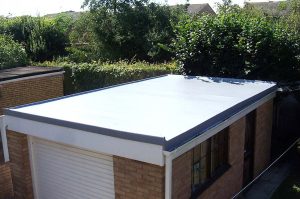
Regular checks make a real difference. Keeping outlets clear, removing debris, and paying attention to edge details can help stop minor issues becoming major ones. If something looks lifted, cracked, or poorly sealed, it is worth having it inspected before water has the chance to track underneath the roof covering.
Professional inspections are especially useful if leaks keep returning or if the source is not obvious. A proper survey can help pinpoint whether the issue is localised or part of a wider problem. On more awkward or difficult to access roofs, a drone roof survey or a more detailed roof inspection can help build a clearer picture before repair work is planned.
When a Repair Is Enough and When More Work May Be Needed
Some edge and outlet leaks can be dealt with through targeted repair work, particularly where the rest of the roof is still in good condition. If the defect is isolated and caught early, a local repair may be enough to restore performance and prevent further water ingress. That is often the best outcome because it limits disruption and avoids unnecessary expense.
Where leaks keep coming back, though, it may suggest a broader issue with the detailing, the roof design, or the age of the system. In that situation, patching the same area repeatedly rarely makes much sense. It is often better to get expert advice on whether more comprehensive flat roof repairs or wider refurbishment work would be the smarter long term option.
Final Thoughts
Flat roof leaks often begin at the details, not in the middle of the roof. Edges, outlets, corners, and junctions all have more going on than the open span of the waterproofing, which makes them more vulnerable to failure. That does not mean every leak will start there, but it does explain why these areas deserve closer attention when a roof begins to show signs of trouble.
If a leak has appeared more than once, or if water is pooling near edges or outlets, it is usually worth having the roof looked at properly rather than guessing. Early action can mean a far simpler fix and a lot less internal damage.
Need a flat roof checked properly?
If you are dealing with a recurring leak or want a professional opinion on your roof, arrange an inspection with Watkins Flat Roofing.