
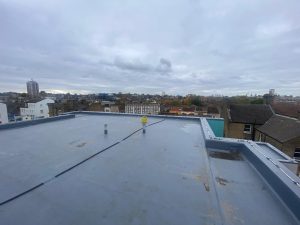
Flat roofs naturally collect debris more easily than pitched roofs. Because the surface is largely level, leaves, twigs, and other material carried by the wind tend to settle rather than slide off.
Over time, this debris can begin to gather in corners, around edges, or near drainage points where it is less likely to move on its own.
Properties surrounded by trees often see this happen more frequently. During autumn, large amounts of leaves may fall directly onto the roof, while smaller branches and seeds can accumulate throughout the rest of the year.
Even a modest amount of organic debris can slowly build up if it is not cleared periodically.
How Tree Debris Can Block Drainage
Flat roofs rely on drainage outlets and gutters to guide rainwater away from the surface. When leaves, twigs, and other debris collect around these areas, they can begin to restrict water flow.
At first, the blockage may appear minor, but as debris continues to gather, it can eventually prevent water from draining efficiently.
When drainage is restricted, water may remain on the roof surface for longer than intended. Standing water places extra strain on roofing materials and seams.
Over time, repeated exposure to pooled water may increase the likelihood of small leaks developing or existing weak points becoming worse.
Why Moss and Organic Growth Develop on Flat Roofs
Debris that remains on a roof often traps moisture, particularly after periods of rain. These damp conditions can create an environment where moss and other organic growth begin to develop.
Moss tends to thrive in shaded areas, especially where leaves or dirt remain undisturbed for long periods.
While moss may seem harmless initially, it can gradually spread across the roof surface.
As it grows, it retains moisture and keeps the roof covering damp for extended periods. In some situations, this constant moisture may slowly affect certain roofing materials and shorten their expected lifespan.
The Potential Damage Caused Over Time
Moisture trapped beneath debris or moss can slowly affect the condition of a flat roof.
Over time, roofing membranes and seals may begin to deteriorate if they remain damp for prolonged periods. This may lead to small cracks or weaknesses forming along joints or edges.
Another issue is that debris can hide developing problems. Leaves and organic matter may cover small splits, lifting seams, or other early warning signs.
By the time these problems become visible, the damage may have progressed further than expected.
Signs That Debris or Moss Is Becoming a Problem
One of the clearest signs is visible moss growing across sections of the roof surface. Property owners may also notice small plants starting to appear in areas where debris has remained for a long time.
Persistent damp patches or dark areas that remain after rain can also indicate that moisture is being trapped.
Slow draining water or overflowing gutters may suggest debris is blocking the roof outlets.
If water appears to sit on the roof for longer than usual after rainfall, it may be worth having the drainage checked and any accumulated debris removed.
How Regular Maintenance Helps Protect a Flat Roof
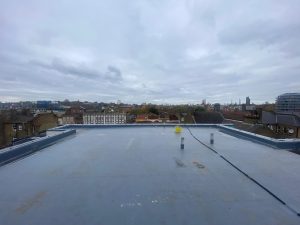
Regular maintenance can play a significant role in preventing debris related issues.
Periodically clearing leaves, twigs, and dirt from the roof surface helps ensure drainage systems continue to function properly. Even occasional inspections may identify small issues before they develop into more serious problems.
Professional roof inspections can also help maintain the long term condition of a flat roof. A roofing specialist can safely remove moss, check drainage points, and assess the roof covering for signs of wear.
Taking these steps from time to time may extend the life of the roof and reduce the chance of unexpected repair costs later on.