
Flat roof membranes form the main waterproof layer that protects your property from rain, wind, and long-term weather exposure.
While they are often hidden from view, their performance plays a major role in how reliable and durable a flat roof will be over time.
Choosing the right membrane is not simply a technical decision. It often shapes how frequently repairs are needed and how confident you feel during periods of heavy rainfall.
Many homeowners only start thinking about membrane materials when a leak appears or visible damage becomes difficult to ignore. At that stage, options can feel overwhelming.
EPDM, GRP, felt, and modern single-ply systems all promise protection, yet each behaves differently once exposed to the British climate. Understanding these differences early may help prevent costly mistakes later.
Why Choosing the Right Membrane Matters
The membrane you choose affects far more than just waterproofing. It influences how well your roof handles temperature changes, foot traffic, and long-term wear.
Some materials cope better with constant expansion and contraction, while others may become brittle or develop weak points over time.
A cheaper membrane might appear attractive at first, especially when budgets are tight. However, lower upfront costs sometimes hide future repair expenses.
In many cases, investing slightly more at the beginning can reduce disruption and maintenance costs over the lifespan of the roof.

EPDM Rubber Roofing: Pros and Cons
EPDM is a synthetic rubber membrane that has become increasingly popular across the UK. It is supplied in large sheets and bonded to the roof surface, creating a flexible and largely seamless covering.
Because it stretches rather than cracks, it tends to cope well with temperature changes and movement within the building.
On the downside, EPDM installation requires care and experience. Poor adhesion or weak joint detailing can lead to lifting and water ingress.
Repairs may also require specialist products, meaning quick DIY fixes are not always practical. While durable, EPDM still relies heavily on proper installation.
GRP Fibreglass Roofing: Pros and Cons
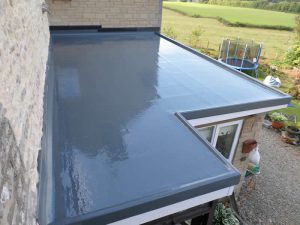
GRP, also known as fibreglass roofing, is created by applying layers of resin and glass fibre matting directly onto the roof deck.
Once cured, it forms a solid, seamless surface that resembles a hard shell. This makes it particularly attractive for modern extensions and balconies.
However, GRP can be sensitive to movement and temperature fluctuations. If the underlying structure shifts, hairline cracks may appear over time.
Installation is also weather-dependent, as moisture and low temperatures can affect curing. When applied poorly, long-term performance may suffer.
Torch-On Felt Roofing: Pros and Cons
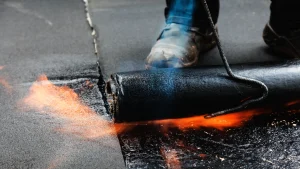
Torch-on felt remains one of the most traditional flat roofing systems in the UK. It involves heating bitumen-backed felt layers and bonding them together.
Many property owners are familiar with felt roofing, as it has been used for decades on garages and extensions.
Its main appeal is affordability and proven reliability when installed correctly. However, felt roofs often have a shorter lifespan than modern systems.
Seams can weaken, and surface wear may appear sooner. Regular inspections are usually needed to prevent minor defects from becoming major leaks.
PVC and Single-Ply Membranes: Pros and Cons
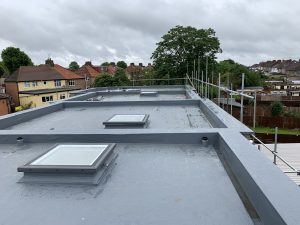
Single-ply membranes, including PVC and similar materials, are lightweight sheets mechanically fixed or bonded to the roof.
They are commonly used on larger commercial buildings but are increasingly appearing on residential projects. Their clean appearance and relatively quick installation make them appealing.
Despite this, single-ply membranes can be vulnerable to punctures and impact damage. Sharp debris, falling branches, or frequent foot traffic may shorten their lifespan.
Repairs often require professional heat-welding equipment, which limits the scope for simple maintenance.
Liquid Applied Membranes: Pros and Cons
Liquid applied systems are brushed or rolled onto the roof surface, forming a continuous waterproof layer once cured.
They are particularly useful for complex roofs with multiple penetrations, awkward corners, or uneven surfaces. Because they conform to the shape of the roof, weak joints are reduced.
Their effectiveness depends heavily on surface preparation and correct application. If moisture is trapped beneath the coating, blistering and peeling may occur.
Some products also require periodic reapplication, which can add to long-term maintenance costs.
Cost Comparison Between Membrane Types
Installation costs vary significantly between membrane systems. Felt roofing often remains the most budget-friendly option, while GRP and EPDM tend to sit in the mid-range.
Single-ply and specialist liquid systems may carry higher initial costs, especially on smaller domestic projects.
It is worth considering long-term value rather than focusing solely on the first quote. A cheaper installation that requires frequent repairs can quickly become more expensive than a higher-quality system with minimal maintenance.
Cost comparisons should always include expected lifespan and upkeep.
Lifespan and Maintenance Requirements
Different membranes offer very different service lives. EPDM and high-quality single-ply systems may last several decades when maintained properly.
GRP often provides strong performance for 20 years or more, while felt typically requires replacement sooner.
Maintenance also varies between systems. Some membranes only need occasional visual checks, while others benefit from annual inspections.
Clearing debris, checking drainage, and addressing small defects early can significantly extend roof life.
Suitability for Different Property Types
Not all membranes suit every building. Garages and sheds may function well with felt, while modern extensions often benefit from EPDM or GRP. Commercial properties frequently favour single-ply systems due to their scalability and weight advantages.
Factors such as roof size, foot traffic, insulation layout, and drainage design all influence suitability.
A membrane that performs well on one property may be less effective on another. This is why site-specific assessment remains essential.
Environmental Impact and Energy Efficiency
Some membrane materials are more environmentally friendly than others.
EPDM and certain single-ply systems may be recyclable, while traditional felt relies heavily on bitumen-based products. Sustainability is becoming a growing concern for many homeowners.
Energy efficiency is also linked to membrane choice and insulation compatibility.
Well-sealed systems reduce heat loss and prevent moisture from penetrating the insulation layers. Over time, this may contribute to lower heating costs and improved indoor comfort.
Common Mistakes When Choosing a Flat Roof Membrane
A common mistake is choosing purely on price without considering performance.
Homeowners may assume all membranes offer similar protection, only to discover differences after problems appear. Rushing decisions can lead to regret later.
Another issue is relying on generic advice rather than property-specific recommendations. Online forums and neighbours’ experiences may not reflect your roof’s unique conditions.
What works well elsewhere may not suit your own building.
When to Seek Professional Advice
Professional roofers assess more than just surface appearance. They consider structural support, drainage patterns, insulation layout, and exposure to weather.
This broader perspective helps match the right membrane to the property.
Seeking advice early can also prevent unnecessary work. A specialist may identify repairable issues that do not require full replacement.
In many cases, informed guidance saves both time and money.
Conclusion
There is no single “best” flat roof membrane for every situation. Each material offers advantages and limitations that become more apparent over time.
Understanding these differences allows for more confident decision-making.
By weighing cost, lifespan, maintenance needs, and suitability, homeowners can make more balanced choices.
With proper installation and care, the right membrane can provide reliable protection for many years to come.