
At some point, many homeowners find themselves wondering whether it is safe to walk on a flat roof.
You might want to clear leaves from a gutter, check where a leak is coming from, clean around a rooflight, or retrieve something that has blown onto the roof during bad weather.
From the ground, it can look fairly solid and easy to access.
The reality is a little more complicated. Some flat roofs can handle careful, occasional foot traffic, but others are not suitable to walk on at all.
The answer depends on the roof structure, the material used, its age, its current condition, and whether it was ever designed to be used as an access area.
Can You Walk on a Flat Roof?
In some cases, yes, you can walk on a flat roof without causing damage, but it should never be treated as a given. A flat roof is primarily designed to keep water out of the building below.
Unless it has been built as a balcony, terrace, walkway, or regularly accessed area, it may not be intended to cope with people walking across it often.
Occasional access for inspection or maintenance may be fine on certain roofs, especially if they are in good condition and the person accessing them knows what to avoid.
Even then, damage can happen more easily than people expect. A sharp stone stuck in a shoe, a dropped tool, or repeated pressure in the wrong place can mark, split, puncture, or weaken the waterproof surface.
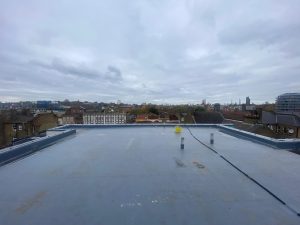
What Type of Flat Roof Do You Have?
Different flat roofing systems react differently to foot traffic. Felt roofs, EPDM rubber roofs, GRP fibreglass roofs, liquid systems, and single-ply membranes all have their own strengths and weak points.
A newer, well-installed roof may tolerate light access better than an older roof that has already started to crack, bubble, lift, or wear thin.
Some materials are more vulnerable to scuffs, punctures, or surface damage, particularly around seams, corners, outlets, and edges. For example, an EPDM roof may be durable, but it can still be damaged by sharp objects.
A fibreglass roof can feel hard underfoot, yet older or poorly installed areas may crack if placed under stress. This is why it helps to know exactly what system you have before stepping onto it.
Was the Roof Designed for Foot Traffic?
There is a big difference between a standard flat roof and one that has been designed for regular use. A normal flat roof over an extension, garage, porch, or commercial unit may only be intended for occasional maintenance access.
A roof terrace or balcony, on the other hand, should be designed with walking, furniture, drainage, and safety in mind from the beginning.
Roofs built for regular foot traffic usually need suitable structural support, proper decking, protective layers, slip-resistant surfaces, and edge protection. Without these features, using a standard flat roof as a regular access area can create problems over time.
It may appear fine at first, but repeated walking could gradually damage the waterproofing or put pressure on areas that were never meant to carry regular loads.
The Risks of Walking on a Flat Roof
One of the main risks is damaging the waterproof layer. This could mean puncturing the membrane, cracking brittle material, loosening a seam, disturbing flashing, or making an existing weak point worse.
Sometimes the damage is obvious straight away, but not always. A small tear or split may only become noticeable later when rainwater starts finding its way inside.
There is also the personal safety side to consider. Flat roofs can be slippery after rain, frost, moss, or algae growth. They may also have hidden soft patches, unstable boards, or weak areas around outlets and rooflights.
Even a low flat roof can be dangerous if you slip near the edge or put your foot through a damaged section, so it is worth treating any roof access seriously.
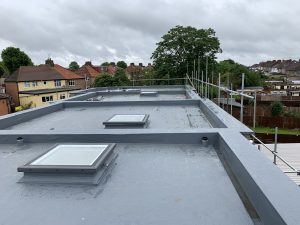
How to Walk on a Flat Roof More Safely
If access is genuinely needed and the roof appears suitable, it is important to move carefully and avoid putting unnecessary pressure on one small area.
Wear soft-soled footwear, avoid sharp heels or heavy boots with stones in the tread, and do not drag ladders, tools, buckets, or equipment across the surface. Small things like this can make a surprising difference.
It is also sensible to avoid walking on the roof when it is wet, icy, or covered in moss. Keep away from the edges, do not step on rooflights, and avoid areas that look raised, bubbled, sagging, cracked, or soft.
If you need to carry anything, keep it light and manageable. Heavy tools, materials, and equipment can increase the chance of both roof damage and personal injury.
When You Should Not Walk on a Flat Roof
You should avoid walking on a flat roof if there are clear signs of damage. These may include ponding water, sagging areas, bubbles, loose felt, visible cracks, soft patches, lifted edges, or damp patches inside the property below.
These signs suggest the roof may already be under stress, and walking on it could make the problem worse.
It is also best not to walk on an older roof if you do not know its condition. A roof can look reasonably intact from a distance while still having weakened boards or fragile areas underneath.
If there is an active leak, recent storm damage, or any doubt about the structure, it is safer to leave it alone and arrange a professional inspection.
Why Professional Roofers Use Protection
Professional roofers do not usually just wander across a flat roof without thinking about the surface below them.
Depending on the job, they may use crawl boards, walkway mats, temporary access equipment, or other protective measures to spread weight and reduce pressure on vulnerable areas.
This helps protect both the roof and the person working on it.
This is especially important when carrying out repairs, inspections, cleaning, or installation work around outlets, vents, rooflights, walls, and edges.
These areas are often where leaks are most likely to appear, so extra care is needed. A roofer will usually know where to step, what to avoid, and how to carry out the work without causing unnecessary damage.
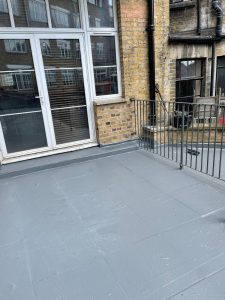
Can Walking on a Flat Roof Void a Warranty?
It is possible that walking on a flat roof could affect your warranty, depending on the terms. Some warranties include conditions around maintenance, accidental damage, unauthorised access, or work carried out by other trades.
If the roof has been damaged because someone walked on it incorrectly, dragged equipment across it, or used it for something it was not designed for, the repair may not be covered.
Before accessing the roof yourself, it is worth checking any paperwork you received when the roof was installed.
The warranty may explain whether foot traffic is allowed, what kind of access is acceptable, and whether protective measures are needed.
This might feel like a small detail, but it could matter if you need to make a claim later.
What to Do If You Need Access to Your Flat Roof
If you need access to your flat roof, start by asking why you need to go up there in the first place.
Some tasks may be possible from a ladder, from inside through a rooflight, or by using safer access equipment. In other cases, the job may need a proper inspection, especially if you are trying to trace a leak or check suspected damage.
For maintenance, cleaning, repairs, or inspections, it is often better to speak to a flat roofing specialist rather than risk causing damage yourself.
A professional can assess the roof safely, identify any weak points, and advise whether the surface is suitable for access. That can save you from turning a minor concern into a much more expensive repair.
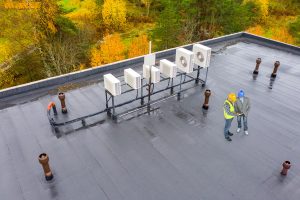
Conclusion
So, can you walk on a flat roof without damaging it? Sometimes, but only if the roof is suitable, in good condition, and accessed with care.
A flat roof should not automatically be treated like a normal floor, especially if it was only designed to protect the building rather than support regular foot traffic.
If you are unsure, the safest answer is usually not to walk on it. Getting professional advice first may prevent accidental damage, protect your warranty, and reduce the risk of injury.
A cautious approach is almost always better than stepping onto a roof and hoping for the best.