
A flat roof can look sound from below and still be carrying risks that only become obvious when water gets in. By then, the decision is often more urgent, and the cause may have been developing quietly for some time.
A proper flat roof inspection should look beyond active leaks. It should assess the whole roof system, from the membrane and edge details to outlets, rooflights, older repairs and safe access, so owners can make informed choices about maintenance, repair or renewal.
Why an inspection should look beyond the leak itself
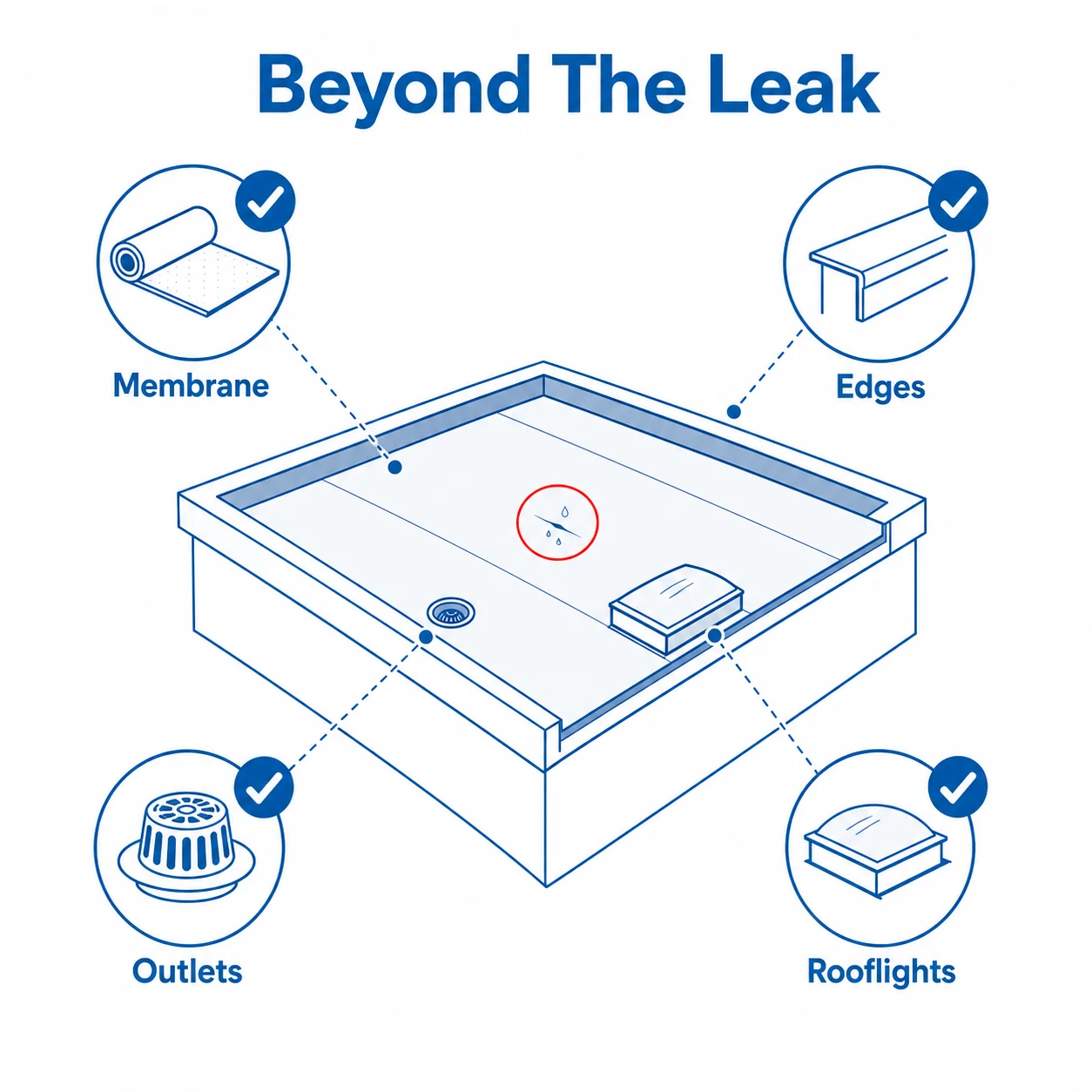
Leaks matter, of course. If water is entering the building, the first priority is to understand where it is coming from and how to stop it. The challenge with flat roofs is that the point where water appears inside is not always directly below the defect outside. Water can track through layers, insulation, deck joints and service penetrations before it shows up.
That is why a worthwhile inspection does not simply ask, where is it dripping? It asks what the roof is doing as a complete system. Is water draining properly? Are the edges secure? Are old patches still bonded? Has the membrane reached the point where small repairs are no longer the best answer?
For homeowners, this can prevent repeated callouts for the same symptom. For commercial buyers, landlords and facilities teams, it helps separate a minor maintenance issue from a developing asset risk. Watkins Flat Roofing provides flat roof surveys and roof inspections for exactly this kind of informed decision making.
Membrane condition tells you how the roof is ageing
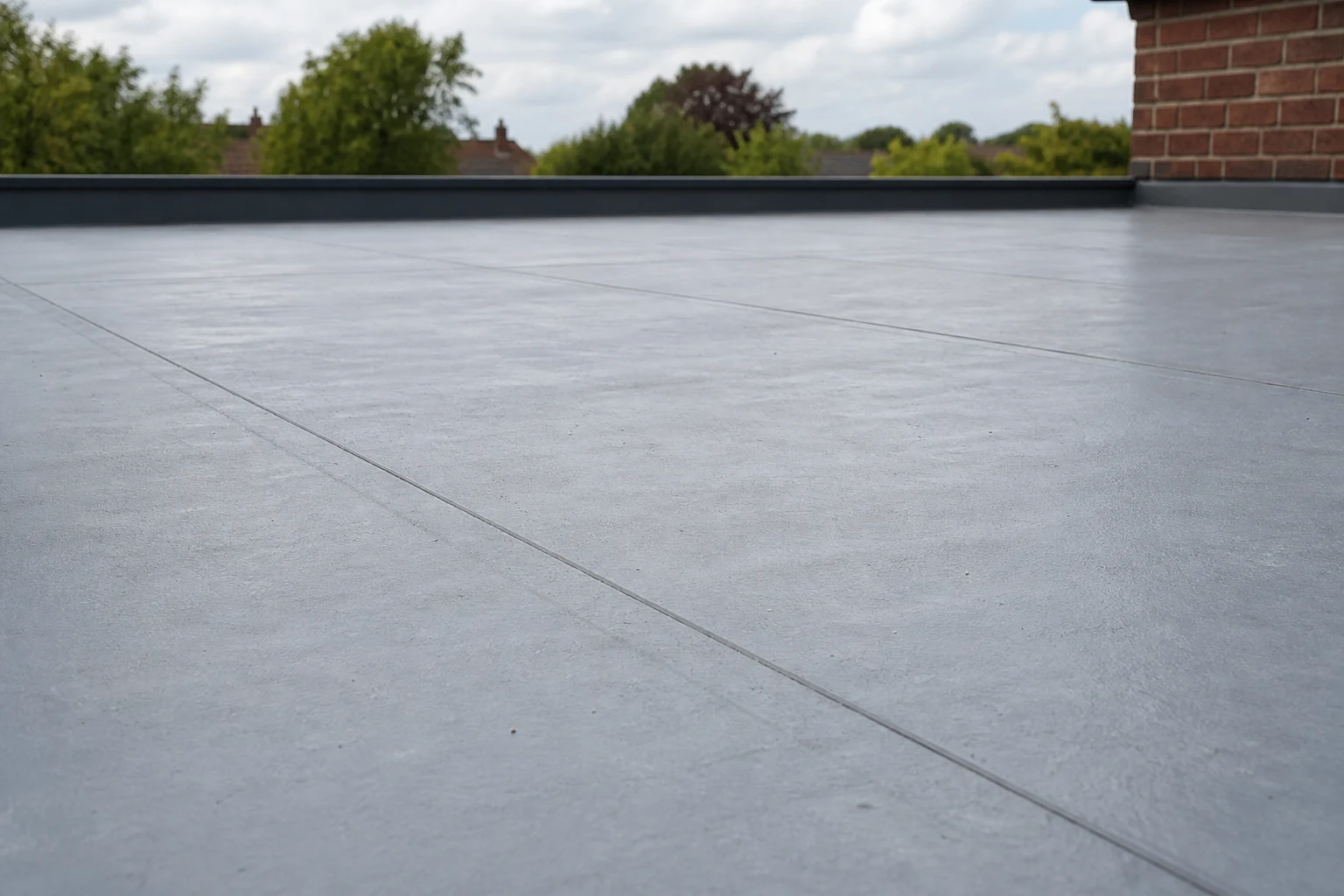
The membrane is the main weathering layer of a flat roof, so its condition should sit at the centre of any inspection. Different systems age in different ways, but the basic questions are similar. Is the surface still continuous? Is it bonded correctly? Are there splits, blisters, wrinkles, punctures or areas where the surface has become brittle?
On liquid roofing systems, an inspection should consider whether the coating remains intact and whether vulnerable details still have adequate protection. Thin areas, pinholes and damaged reinforcing can all create routes for water. On single ply systems, the check should include seams, laps, upstands, fixings and areas where movement or impact may have stressed the membrane.
Flat roofs also need to cope with foot traffic, maintenance visits and occasional objects placed on the roof. Even where the roof is not intended as a walkway, access for servicing plant, cleaning outlets or checking rooflights can leave scuffs and pressure marks. A good inspector looks for signs of wear in the places people actually move across.
The aim is not to make every small mark sound alarming. It is to understand whether the membrane is performing as intended, whether small defects can be repaired confidently, and whether wider deterioration suggests a bigger conversation about renewal.
Edges, trims and upstands are common weak points
Edges are where flat roofs often reveal their weaknesses. The roof covering has to turn up, terminate, meet trims, connect to walls and deal with wind exposure. These junctions are more complex than the open field of the roof, so they deserve careful attention.
An inspection should check whether edge trims are secure, whether sealants have failed, whether the membrane is lifting, and whether water can get behind the detail. It should also look at upstands around walls, parapets, kerbs and service penetrations. A small opening at an edge can allow water into the roof build up without immediately producing an obvious drip inside.
Outlets and gutters are another essential part of the picture. A flat roof is only as reliable as its drainage. If outlets are blocked, undersized, damaged or poorly detailed, water can sit on the roof for longer than it should. Standing water increases stress on weak points and can make minor defects more serious over time.
Watkins has covered this issue in more detail in its guide to why flat roof leaks start around edges and outlets. During an inspection, those areas should never be treated as a quick glance. They are often where the real cause is found.
Rooflights, penetrations and old repair patches need close checks

Rooflights bring useful daylight into a building, but they also introduce joints, kerbs, fixings and seals. An inspection should check the condition of the rooflight itself and the detailing around it. Cracked units, poor seals, damaged kerbs or failing flashing can all create water paths. Even when the rooflight is not leaking today, early deterioration around it may be worth addressing before the next period of bad weather.
Service penetrations need the same care. Pipes, vents, cables and supports all interrupt the roof covering. The inspector should look for poor sealing, loose collars, movement, impact damage and any changes made after the original roof installation. Later additions are sometimes the point where a previously reliable roof becomes vulnerable.
Old repair patches also tell a story. A patch may be perfectly sound, but it should still be checked. Has it bonded properly? Is the edge lifting? Does it cover the true defect, or has the roof been patched repeatedly around the same area? Multiple repairs in one zone can suggest movement, trapped moisture or a detail that needs a better solution.
This is where specialist judgement matters. The goal is not to criticise past repairs for the sake of it. It is to decide whether the existing patch is still doing its job, whether a fresh repair is sensible, or whether the underlying issue needs a more durable specification.
Access and safety shape what can be inspected
A flat roof inspection is only useful if the inspector can see the areas that matter safely and clearly. Access should therefore be part of the inspection plan, not an afterthought. The roof may need ladder access, scaffold, edge protection or another safe method depending on height, layout and condition.
Safe access also affects the quality of the findings. If an inspector cannot reach an outlet, rooflight, edge or plant area properly, they should be clear about that limitation. Guesswork is not the same as inspection. A useful report should explain what was checked, what could not be checked, and whether further access is needed.
In some cases, visual technology can help with areas that are difficult to reach, although it does not replace hands on assessment where close inspection is needed. Watkins has a practical comparison of drone surveys and traditional inspections that explains when each approach may be appropriate.
Commercial roofs often have additional access considerations because of plant, services, roof zones and ongoing occupation below. A structured inspection helps reduce disruption while still building a clear picture of condition and risk.
How inspection findings guide repair or renewal decisions
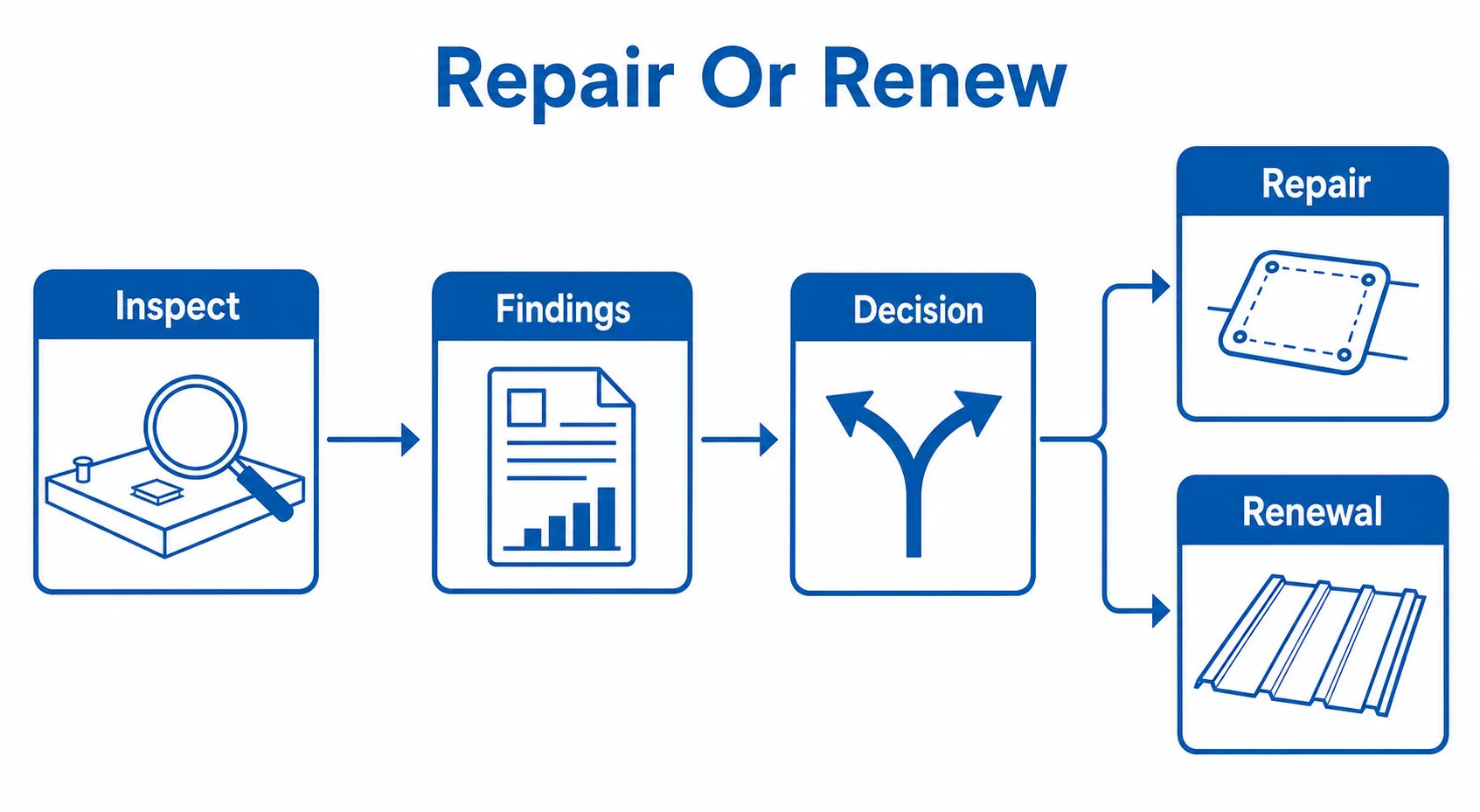
The best inspection reports do more than list defects. They help the owner understand what those defects mean. A small puncture in an otherwise healthy membrane may call for a targeted repair. A failing edge detail may need careful local work. Widespread cracking, repeated patch failure or water trapped within the roof build up may point towards a broader renewal discussion.
This distinction matters because flat roof decisions should be proportionate. A proper inspection can prevent unnecessary replacement where repair is enough. It can also prevent false economy where repeated small repairs are unlikely to solve the real issue.
For buyers, landlords and property managers, the inspection can support budgeting and planning. It can identify urgent defects, maintenance items and areas to monitor. For homeowners, it brings clarity at a point when water staining or damp patches can feel worrying and uncertain.
If repair is the right route, a specialist can then advise on suitable materials and detailing. Watkins Flat Roofing also provides flat roof repairs where an inspection shows that focused remedial work is the right answer.
The value of the inspection is the judgement behind it. A flat roof is a system, not just a surface. Looking beyond leaks helps reveal whether the roof needs maintenance, repair, closer monitoring or a planned upgrade.
- A proper flat roof inspection checks the whole roof system, not only the place where water appears inside.
- Membrane condition, seams, liquid coatings, edge trims, outlets, rooflights and service penetrations all need careful attention.
- Old repair patches can reveal whether a past fix is still sound or whether a deeper issue remains.
- Safe access matters because an inspector should be clear about what has and has not been checked.
- Good inspection findings help owners choose proportionate repairs, planned maintenance or renewal with more confidence.
Frequently asked questions
Can a flat roof inspection find problems before there is a leak?
Yes. An inspection can identify early membrane damage, blocked outlets, lifting trims, weak seals, ageing patches and drainage issues before water enters the building. That makes it useful for planned maintenance as well as leak investigation.
Is a visual check from the ground enough for a flat roof?
Usually not. A ground level view can show obvious signs, but it cannot properly assess outlets, rooflights, laps, seams, upstands or surface damage. Safe roof access or an appropriate survey method is normally needed for reliable findings.
What should I expect from a useful flat roof inspection report?
It should explain the condition of the main roof areas and key details, identify defects, note any access limitations, and give practical guidance on repair, monitoring or renewal. The clearest reports help you understand priority as well as condition.
Does every flat roof defect mean the roof needs replacing?
No. Many defects can be repaired if the wider roof is in suitable condition. Replacement becomes more likely when deterioration is widespread, repairs keep failing, drainage is poor or the roof build up has deeper problems.
Arrange a specialist flat roof inspection
If you want a clear view of what your flat roof really needs, Watkins Flat Roofing can inspect the key details and explain the practical next steps with care and clarity.