
A flat roof that leaks once may have a simple local fault. A flat roof that leaks again and again is telling you something more important.
The question is whether you are dealing with an isolated repair issue, or whether the roof system is reaching the end of its reliable service life. Here is how flat roofing specialists usually assess the difference.
Why recurring leaks need a proper diagnosis

Repeated leaks are often misunderstood because the water stain inside the building is rarely directly below the fault outside. Water can travel across decking, insulation, vapour control layers, ceiling voids and structural falls before appearing indoors.
That is why a reliable assessment starts with the roof as a whole, not just the visible drip. A specialist will look at the condition of the waterproofing layer, upstands, outlets, trims, rooflights, penetrations and previous patches. They will also consider whether the falls are helping water drain away, or whether standing water is contributing to the problem.
If you are researching flat roof repairs, the most useful first step is to understand whether the roof has a small defect within an otherwise sound system, or whether several elements are failing together.
When a local flat roof repair may be enough
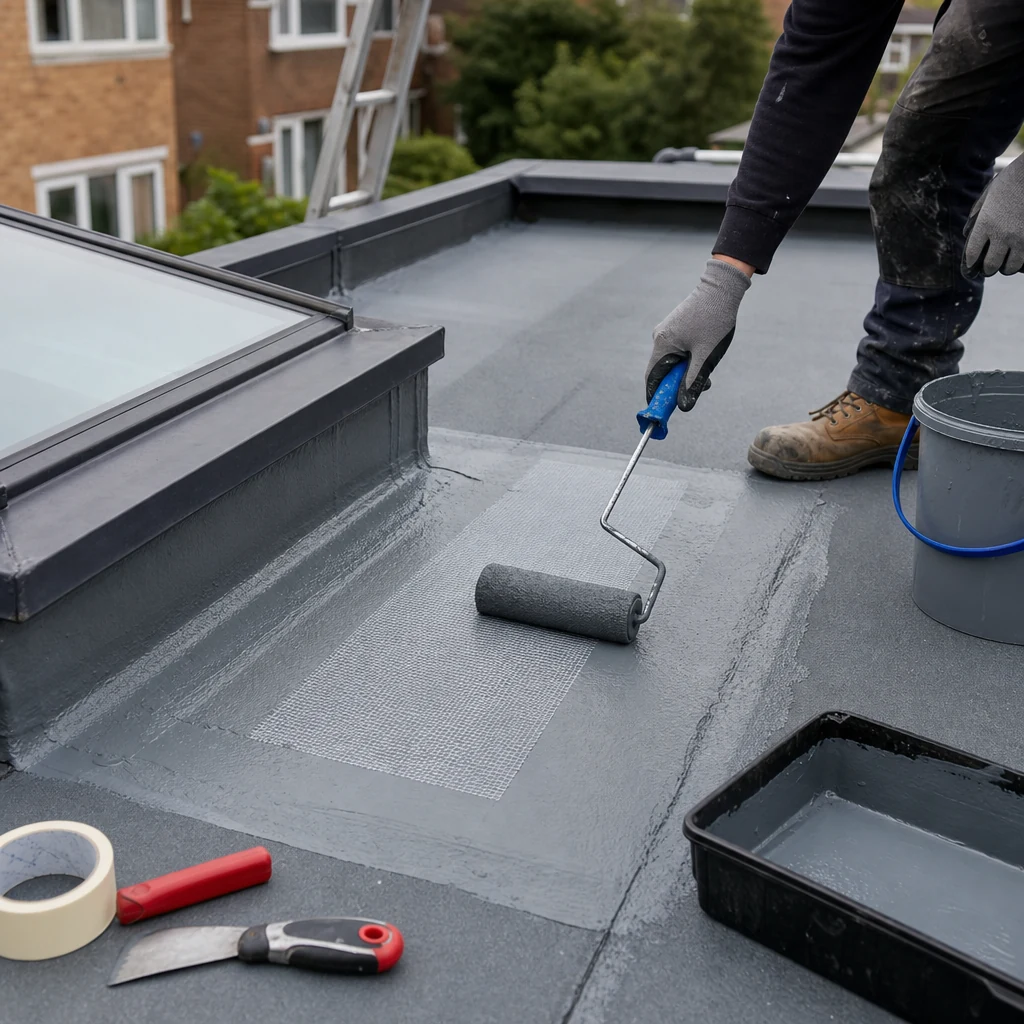
A local repair can be the right answer when the surrounding roof is still in good condition and the cause of the leak is clear. This might include a split in the surface, a damaged edge detail, a failed joint, a puncture, a loose trim or a weakness around a rooflight or outlet.
In these cases, the repair is not just about covering the visible hole. The area normally needs to be cleaned, prepared and detailed correctly so the new repair bonds properly with the existing roof system. On some roofs, a compatible liquid-applied product can be used to reinforce awkward details, transitions and patches.
A repair is more likely to be suitable where:
- The defect is limited to one area.
- The main waterproofing layer is still flexible and well-adhered.
- Decking beneath the surface appears sound.
- There is no pattern of widespread blistering, cracking or failed seams.
- Drainage is broadly working as intended.
Good repair work should feel targeted, tidy and proportionate. The aim is to address the cause, not simply hide the symptom.
Signs the flat roof system may be failing
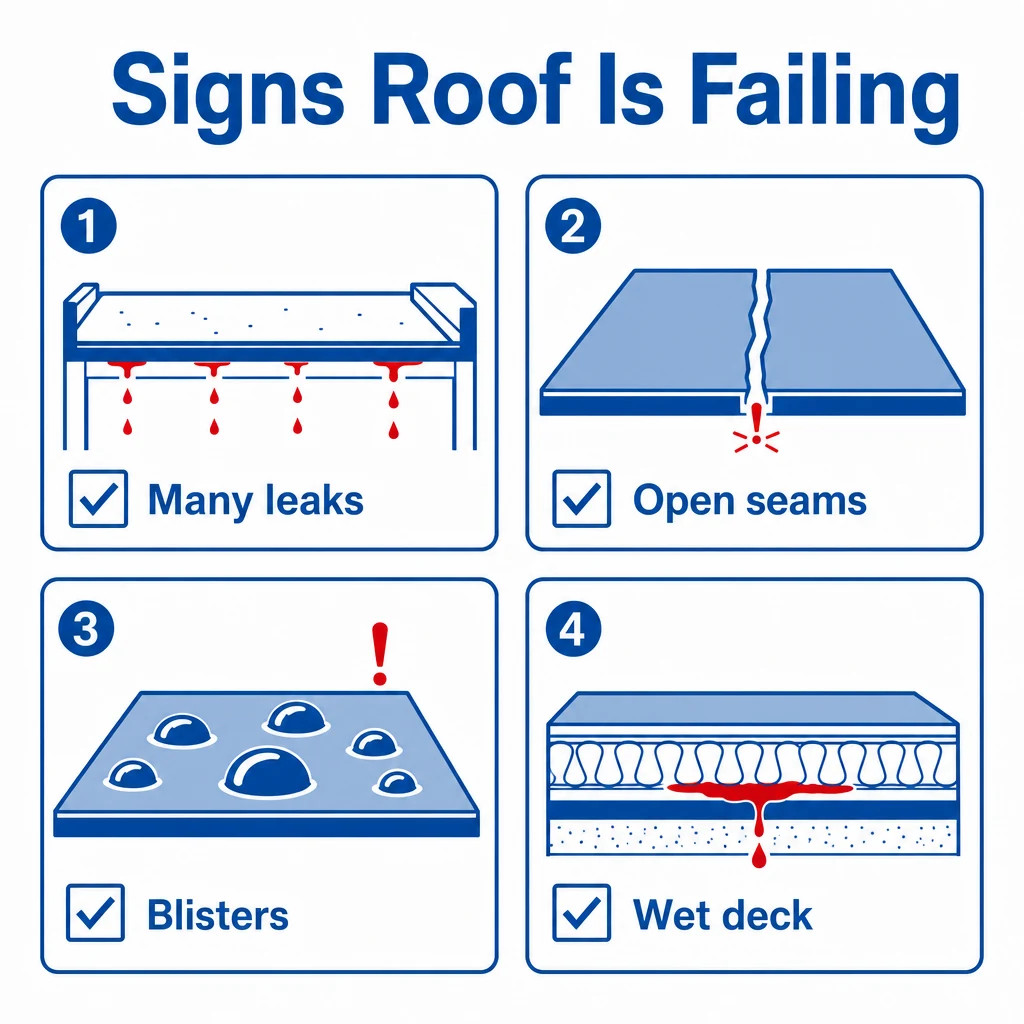
Recurring leaks become more concerning when faults appear in different places, or when older repairs no longer hold. This can point to a roof system that is losing integrity across a wider area.
Warning signs include repeated splits, widespread cracking, soft or spongy areas underfoot, lifting laps, failed perimeter details, persistent ponding, damp insulation, internal staining in multiple locations, or surface deterioration that returns soon after patching.
Replacement may also be considered when the roof build-up is no longer performing as it should. For example, trapped moisture can affect insulation and decking, while poor falls can keep water sitting on the roof for long periods. In those situations, another patch may not deal with the underlying condition.
A well-planned flat roof replacement is not simply a new covering. It is an opportunity to review the roof structure, insulation, drainage, trims, rooflights and detailing so the new system works as a complete assembly.
How specialists inspect the roof before advising
A proper inspection combines visual checks with practical experience of flat roof systems. The surveyor will usually look for the likely entry point, the route water may have taken, and the condition of the roof build-up around the affected area.
They may check laps, outlets, corners, abutments, pipe penetrations, parapets, edge trims and rooflight kerbs. Previous repairs are also important because a patch can reveal where earlier problems occurred, and whether the roof has a history of movement or deterioration.
For roofs that are difficult to access safely, or where a wider overview is helpful, drone roof surveys can support the initial assessment. Aerial images can show ponding, surface condition, blocked outlets and awkward details without unnecessary disruption.
The most helpful conclusion is a clear explanation of options. That might be a local repair, a reinforced detail, a liquid overlay in suitable circumstances, or full replacement where the roof has reached that point.
Where liquid roofing and single ply may fit
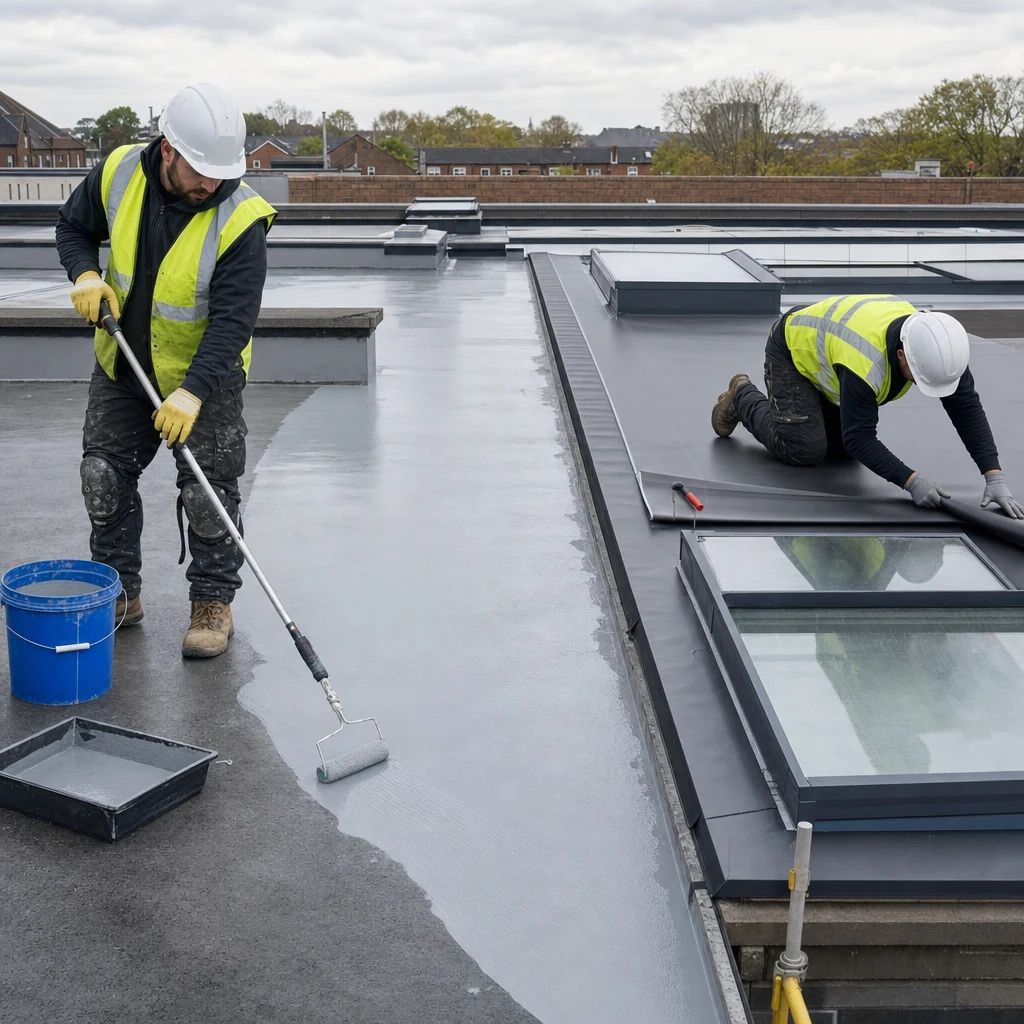
Different flat roof systems suit different situations. Liquid roofing is often useful for complex details, awkward shapes, rooflights, outlets and areas with multiple penetrations. It is applied as a cold liquid and cures to form a seamless waterproof layer when installed correctly.
You can learn more about this approach in the guide to cold-applied liquid roofing. It can be particularly effective where preparation, reinforcement and compatibility are carefully considered.
Single ply roofing uses membrane sheets with formed seams and detailed edges. It can be a strong option for replacement projects where a clean, consistent waterproofing system is required across the roof area.
The important point is that the material should follow the diagnosis, not the other way round. A specialist should first understand why the leak is happening, then recommend the system or repair method that best suits the roof condition, detailing and intended use.
How to choose your next step with confidence
If you have searched for flat roof repair, flat roof replacement or flat roof repairs near me, you may already have seen a wide range of advice. The most reliable next step is to ask for an assessment that explains the cause of the leak and the condition of the roof, not just a quick opinion from ground level.
Useful questions include:
- Where is water most likely entering?
- Is the issue local or part of a wider pattern?
- Is the existing roof suitable for repair or overlay?
- Are there signs of trapped moisture or deck damage?
- What details need attention to prevent the same issue returning?
It can also help to read broader guidance on the flat roofing blog so you understand common systems and terminology before making a decision.
The best outcome is a recommendation that feels clear and practical: repair where repair is right, replace where replacement is the better long-term solution, and avoid unnecessary work where a focused fix will do.
- Recurring leaks need diagnosis because water can travel before showing indoors.
- A local repair may be enough when the surrounding roof system is still sound.
- Widespread cracking, failed seams, soft areas or repeated patch failure may point to replacement.
- Liquid roofing and single ply can both be suitable, depending on the roof condition and detailing.
- A clear inspection should explain the cause, the options and the recommended next step.
Frequently asked questions
Can a flat roof be repaired more than once?
Yes, if the defects are local and the main roof system remains sound. However, repeated repairs in different areas may suggest the roof needs a wider assessment.
How do I know if a leak is from the roof or another source?
A specialist will check roof details, outlets, upstands, rooflights and penetrations, while also considering how water may travel internally before appearing.
Is a liquid repair suitable for every flat roof?
Not always. The existing surface must be compatible, stable and properly prepared. The decision depends on the roof material, condition and cause of the leak.
Should I choose repair or replacement first?
Start with an inspection, not a fixed decision. Once the cause and roof condition are understood, it becomes much easier to choose the right route.
Need clear advice on a recurring flat roof leak?
Watkins Flat Roofing can assess the issue and explain whether a targeted repair or replacement is the right next step.