
Many flat roof problems begin in the detailed areas, not in the open middle of the roof. Upstands, edge trims, rooflights, outlets, corners and repair patches all ask more from a waterproofing system because they interrupt the main surface.
Liquid roofing is often chosen for these awkward areas because it can be applied cold, shaped around complex details and finished as a continuous waterproof layer. For property owners comparing flat roof options, understanding how it works around details makes the specification much easier to judge.
Why flat roof details need special attention
A flat roof may look simple from a distance, but the vulnerable points are usually where the roof covering has to change direction, meet another material or work around a penetration. These junctions are called details, and they include upstands, parapets, edge trims, rooflights, outlets, pipe penetrations, vents and door thresholds.
On the main field of the roof, waterproofing can often be applied in broad, even runs. At the edges and around objects, the system has to cope with corners, changes in level, movement and water flow. Small gaps, weak laps or poorly dressed corners can allow water to track beneath the surface before the source is obvious inside the building.
This is why good detailing is not a cosmetic extra. It is central to how a flat roof performs. A neat detail should shed water properly, bond securely to suitable surfaces and reduce the number of weak points. Watkins Flat Roofing covers this issue in more depth in its guide to why flat roof leaks start around edges and outlets.
Liquid roofing is useful because it does not rely on forcing a rigid sheet into every awkward corner. Instead, the installer prepares the surface, reinforces key areas and applies the liquid system so it follows the shape of the detail.
How cold applied liquid roofing works around details
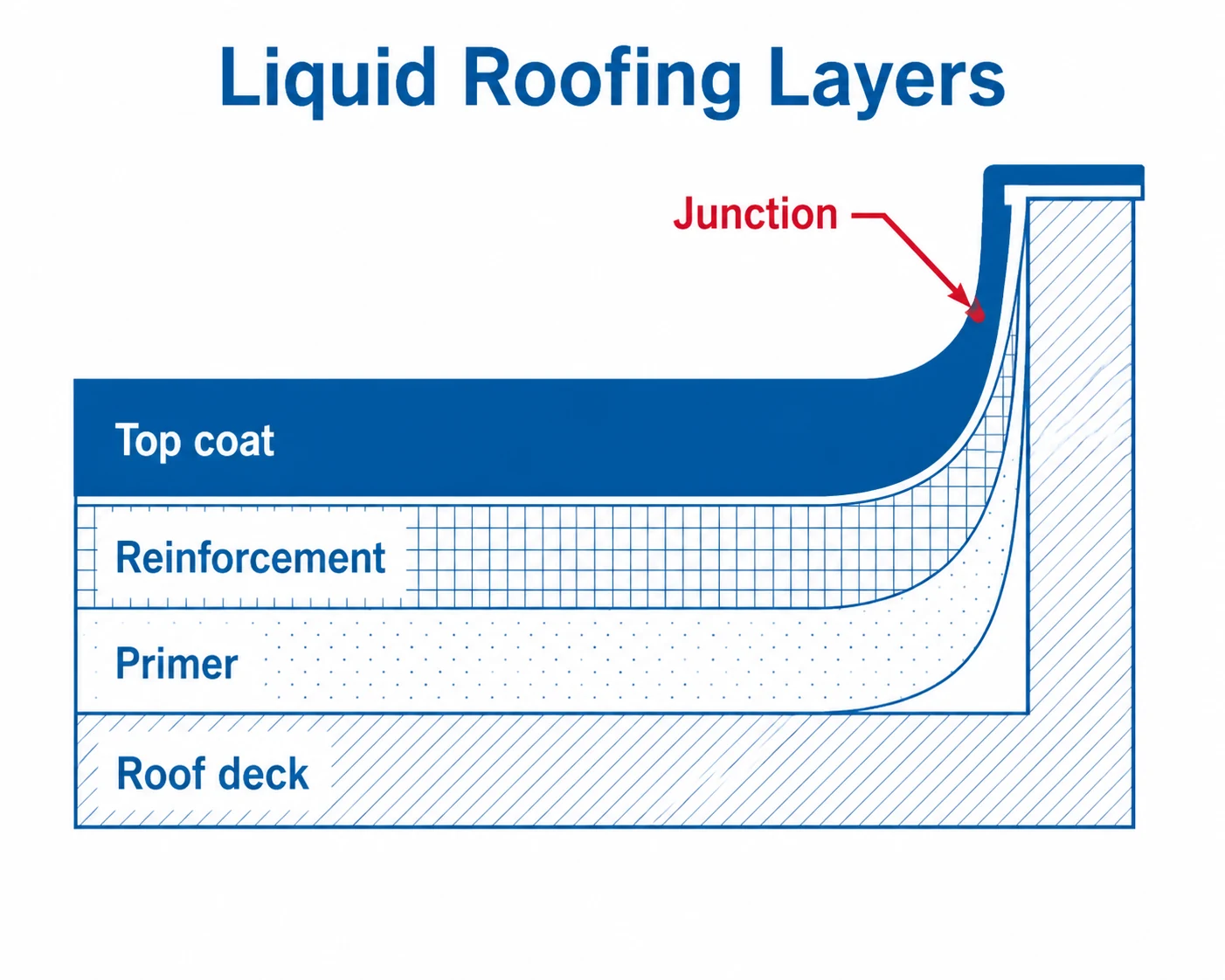
Cold applied liquid roofing is installed without a flame. The liquid coating is applied to the prepared roof surface, often with reinforcement embedded into the system where extra strength is required. Once cured, it forms a seamless waterproof membrane over the roof area and its details.
A typical detail might involve cleaning and preparing the surface, priming where required, applying the liquid coating, bedding reinforcement into the wet material, then applying further coats to achieve the finished waterproof layer. The exact build up depends on the system, the substrate and the condition of the existing roof.
The main advantage around awkward details is conformity. The coating can be worked around corners, over changes in angle and into tight areas where sheets may need multiple cuts or joins. Reinforcement helps strengthen these points, especially where movement or water flow is expected.
This makes liquid systems particularly relevant where the roof has several penetrations, complex edge conditions or existing features that need to remain in place. The aim is not just to cover the roof, but to create continuity between the main surface and every junction that could otherwise become a weak point.
For a service overview, Watkins Flat Roofing explains its approach to cold applied liquid roofing, including how it can be used as part of a specialist flat roofing solution.
Protecting upstands, parapets and vertical junctions
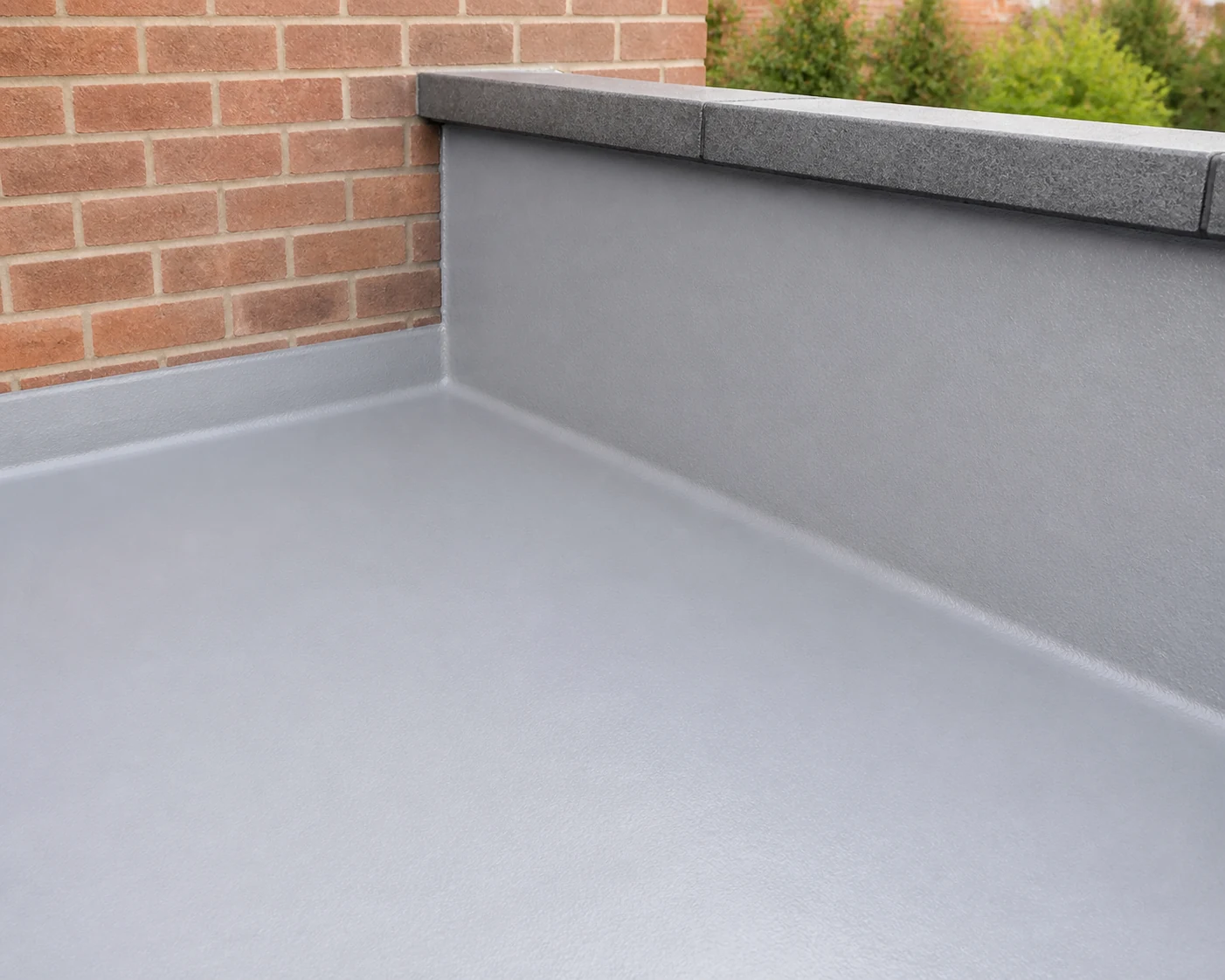
Upstands are one of the most important flat roof details. They occur where the waterproofing turns up a wall, kerb, parapet or raised feature. This change from horizontal to vertical needs careful preparation because water can sit against the base of the upstand, and movement can occur where different materials meet.
With liquid roofing, the coating can be dressed from the roof surface up the vertical face to form a continuous waterproof turn. Reinforcement is commonly used through the angle because the corner is a high stress point. The installer can work the material into the junction so there is no open lap line at the base.
Good preparation matters. Loose material, contamination, trapped moisture and unsuitable surfaces can all affect adhesion. The best result comes from a stable, clean substrate and a system chosen to suit the roof. Where existing materials are present, the installer should assess whether they can be retained, repaired, overlaid or need removal before the liquid system is applied.
The height of the upstand also matters. A low or poorly formed upstand can leave waterproofing exposed to splashback, wind driven rain or water build up. Liquid roofing can protect the junction, but the detail still has to be designed sensibly. Waterproofing works best when it is paired with sound falls, appropriate trims and proper termination at the top edge.
Rooflights, trims, outlets and penetrations
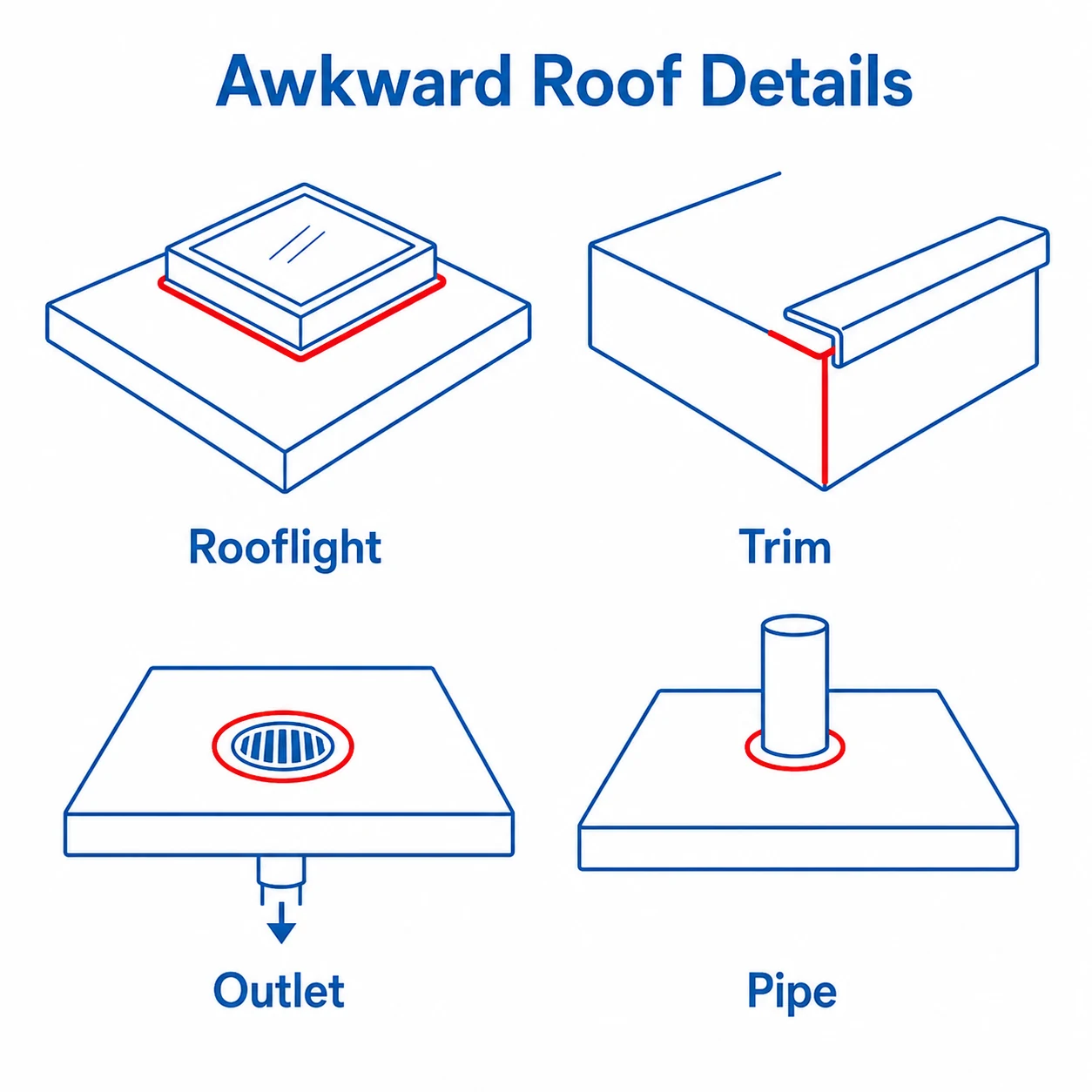
Rooflights bring useful natural light into a building, but their kerbs and corners create several junctions in a small area. Liquid roofing can be shaped around the kerb, reinforced at the corners and connected neatly to the surrounding roof area. This helps reduce reliance on multiple separate pieces around a feature where water may gather.
Edge trims also need care. They define the perimeter of the roof and help guide water away from exposed edges. A liquid system can be applied up to and over suitable trim details, depending on the specification, so the edge is integrated with the roof covering rather than treated as an afterthought.
Outlets and drainage points are another priority. Water naturally moves towards them, so the waterproofing around these areas has to be robust and neatly finished. Liquid roofing can be worked into the surrounding area and reinforced where needed, but the outlet still needs to be clear, correctly seated and compatible with the roof system.
Pipe penetrations, vents and service entries require the same discipline. The shape may be awkward, but the principle is straightforward: prepare the area properly, reinforce vulnerable junctions and maintain a continuous waterproof layer. Where drainage design is also a concern, this guide to drainage solutions to avoid ponding on flat roofs is a useful companion topic.
Where liquid roofing fits among other flat roof options
Liquid roofing is not the only flat roof solution, and it is often compared with single ply roofing and other established systems. The right choice depends on the roof structure, access, existing covering, detail complexity, expected use and the condition of the substrate.
Single ply systems can be very effective on suitable roofs, especially where large sheets can be laid cleanly and detailed correctly. Liquid systems come into their own when the roof has awkward shapes, numerous details or areas where a seamless finish is especially valuable. In some projects, liquid roofing may be used for the entire roof. In others, it may support targeted detailing or repair work as part of a wider specification.
The important point is that material choice should follow the roof, not the other way round. A simple roof with open areas may call for one approach, while a roof with multiple rooflights, tight access points and complex trims may benefit from the flexibility of liquid application.
If you are weighing up different systems, Watkins Flat Roofing also has a helpful overview of common materials used for flat roofing. It gives broader context before you look more closely at the details of one system.
What a good liquid roofing detail should achieve
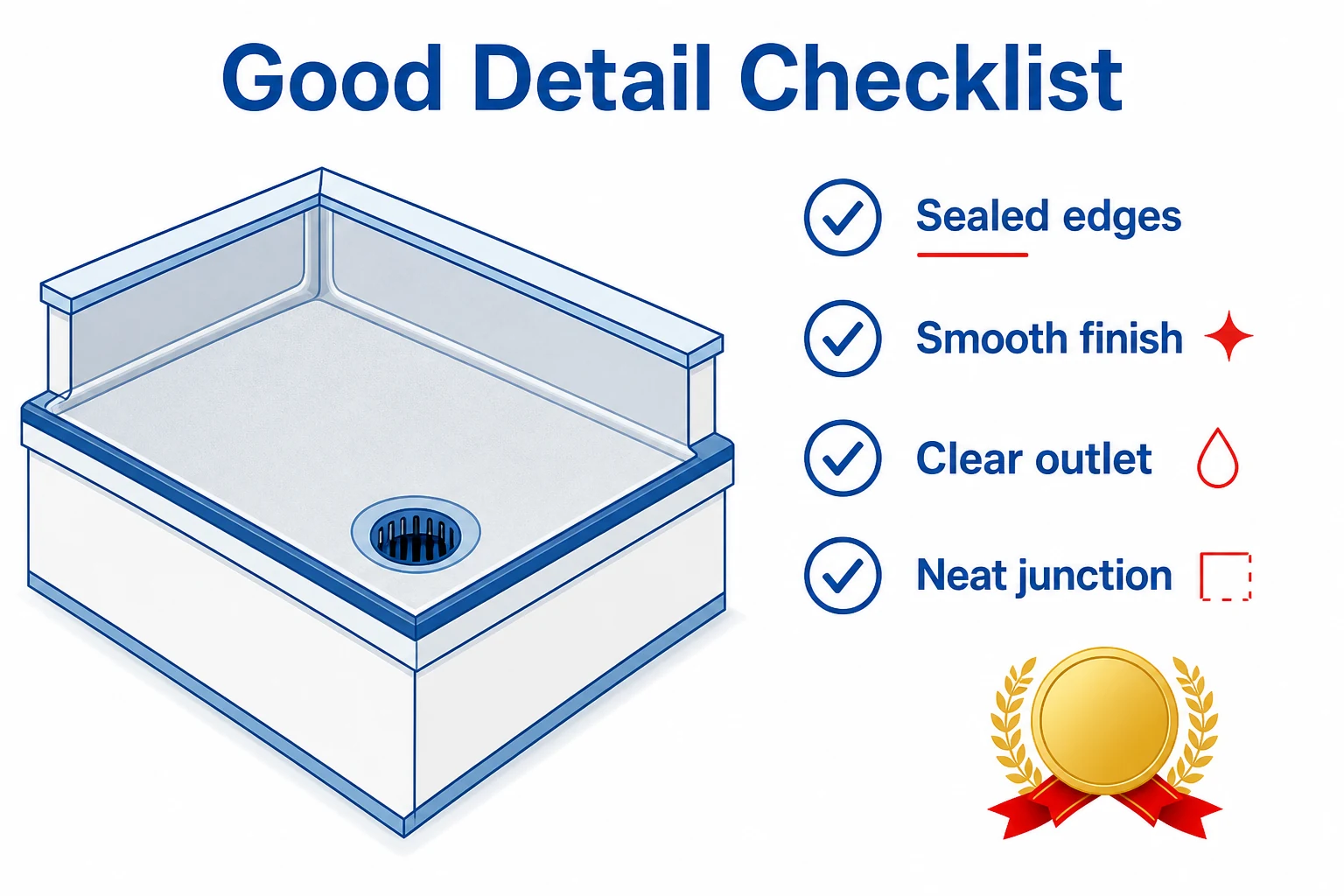
A well installed liquid roofing detail should look deliberate, consistent and fully integrated with the surrounding roof. More importantly, it should support reliable waterproofing at the exact points where leaks often start.
There are several signs of a considered approach. The existing surface should be assessed before work begins. The roof should be cleaned and prepared to suit the system. Reinforcement should be used where the specification calls for it, especially at corners, upstands, outlets and changes in direction. The coating should be applied at the correct coverage and allowed to cure as intended.
It is also important that detailing is not treated separately from the rest of the roof. Falls, drainage, edge protection, termination points and compatibility with existing materials all influence the finished result. A strong detail cannot compensate for water being encouraged to sit in the wrong place, and good drainage cannot protect a poorly bonded junction.
For property owners, the best questions are practical ones. What areas need reinforcement? How will rooflights and outlets be treated? Is the existing surface suitable? How will edges and upstands be finished? A specialist contractor should be able to explain these points clearly without turning the conversation into technical fog.
- Liquid roofing is useful around awkward flat roof details because it can form a continuous waterproof layer over complex shapes.
- Upstands, rooflights, edge trims, outlets and penetrations need careful preparation and reinforcement where specified.
- Cold applied systems avoid flame during installation and can be shaped around detailed areas with control.
- The best result comes from matching the roof system to the roof condition, detail complexity and drainage layout.
- Good detailing is practical waterproofing, not just a neat finish.
Frequently asked questions
Can liquid roofing be used around existing rooflights?
Yes, where the rooflight kerb and surrounding roof are suitable for the chosen system. The area needs proper preparation, and corners are often reinforced because they are common stress points.
Is liquid roofing only for repairs?
No. It can be used for full roof areas, detailed sections and repair zones, depending on the specification. Its flexibility makes it especially useful where neat waterproofing around details is important.
Why are edges and outlets common leak points on flat roofs?
They are places where water is directed, where materials meet and where the waterproofing often changes shape. If preparation, reinforcement or termination is poor, water can find a route beneath the covering.
How do I know if a liquid system is right for my flat roof?
A contractor should assess the existing roof, details, drainage, access and substrate condition. Liquid roofing is often a strong option where the roof has complex junctions or requires a seamless waterproof finish.
Talk to Watkins Flat Roofing
If your flat roof has awkward details, rooflights, upstands or repeat leak points, Watkins Flat Roofing can assess the roof and explain whether liquid roofing is a suitable option.